
City Retreat City Retreat

Living in Amsterdam · Food & Culture

Dutch Winter Recipes: nine classics and where to eat them in Amsterdam

Snert thick enough to stand a spoon in, stamppot with a well of gravy, oliebollen on New Year's Eve. Nine traditional dishes with full recipes, the stories behind them, the Amsterdam restaurants that do them properly and exactly what to ask for at the supermarket.

  • Updated
  • 9 full recipes
  • 18 min read
  • By the City Retreat team, in Amsterdam since 2012

Amsterdam in winter is not subtle. The canals turn the colour of pewter, the wind arrives off the IJ at an angle designed to test your coat, and by late December the sun sets around half past four. Newcomers tend to notice this in their first November and wonder, briefly, what they have done.

The Dutch answer is on the stove. Dutch winter cooking is hearty, inexpensive and built around a handful of good ingredients treated simply: split peas, potatoes, kale, onions, smoked sausage, apples, butter. It is not fancy, and the Dutch would be faintly suspicious if it were. It is, however, exactly what a dark Tuesday evening calls for, and it is the food behind the word gezellig, that untranslatable mix of warmth, company and candlelight.

It is also one of the quickest ways to feel at home. If you have just moved into a furnished apartment in Amsterdam, cooking what your neighbours are cooking does more for a sense of belonging than any amount of sightseeing. This guide gives you nine dishes in full, with the history that makes them worth knowing, places to taste the real thing first, and a shopping guide to the Dutch labels you will meet in the aisles.

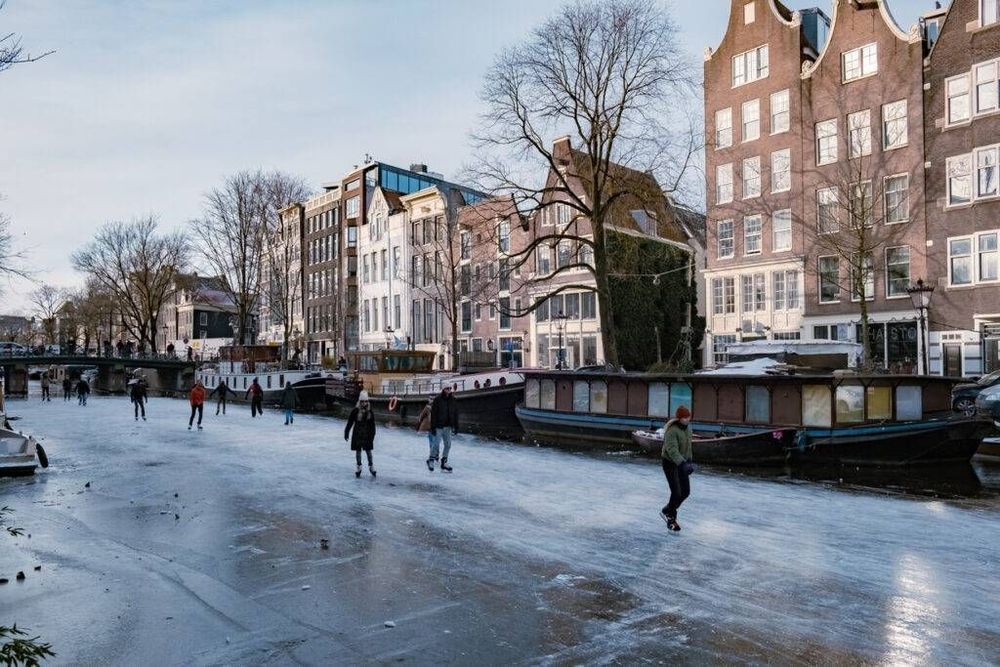
Amsterdam in winter
Winter in Amsterdam. This is the weather these recipes were invented for.

The recipes

Nine Dutch winter dishes, from soup to sweets

Times shown are start to finish, including resting. Choose one and jump straight to it.

  1. SnertDutch split pea soup2 hr 25 min · Easy
  2. BoerenkoolstamppotKale and potato mash with smoked sausage45 min · Easy
  3. Hutspot met klapstukCarrot and onion mash with slow-cooked beef3 hr 35 min · Easy
  4. HacheeBeef and onion stew3 hr 25 min · Medium
  5. StoofpeertjesSlow-poached red pears2 hr 45 min · Easy
  6. OliebollenNew Year's Eve doughnuts1 hr 50 min · Medium
  7. AppeltaartDutch apple pie2 hr 10 min · Medium
  8. PoffertjesSmall buckwheat pancakes1 hr 15 min · Easy
  9. KruidnotenSpiced Sinterklaas biscuits38 min · Easy

When to eat what

The Dutch winter food calendar

Dutch winter food runs to a timetable. Some dishes belong to a single date, others arrive with the first cold snap and disappear when the crocuses come up. Knowing the calendar is half the fun, and it explains why the supermarket seasonal aisle changes every three weeks.

Dutch winter food calendar: dates, occasions and what is eaten
WhenOccasionOn the table
3 OctoberLeidens Ontzet, the relief of Leiden in 1574Hutspot for dinner; herring and white bread in the morning
OctoberFirst cold evenings; oliebollen stalls open; bock beer seasonStamppot, the first oliebollen, bokbier
11 NovemberSint Maarten: children go door to door with lanternsSweets and mandarins handed out at the door
Mid-NovemberSinterklaas arrives in the Netherlands by boatKruidnoten, speculaas, chocolate letters, marzipan
5 DecemberPakjesavond: presents and poemsMore of the above, plus banketstaaf (almond pastry) and hot chocolate
25–26 DecemberFirst and second Christmas DayRoasts with stoofpeertjes, or gourmetten: everyone cooks at the table on a small grill
31 DecemberOud en Nieuw, New Year's EveOliebollen and appelbeignets (apple fritters), then fireworks
January–FebruaryThe coldest weeks; skating when the ice holdsSnert, hachee, stamppot. This is snertweer, "pea soup weather"

Recipe 01 · Soup · Oct – Mar

Snert Dutch split pea soup

The soup you can stand a spoon in, and the undisputed head of the Dutch winter table.
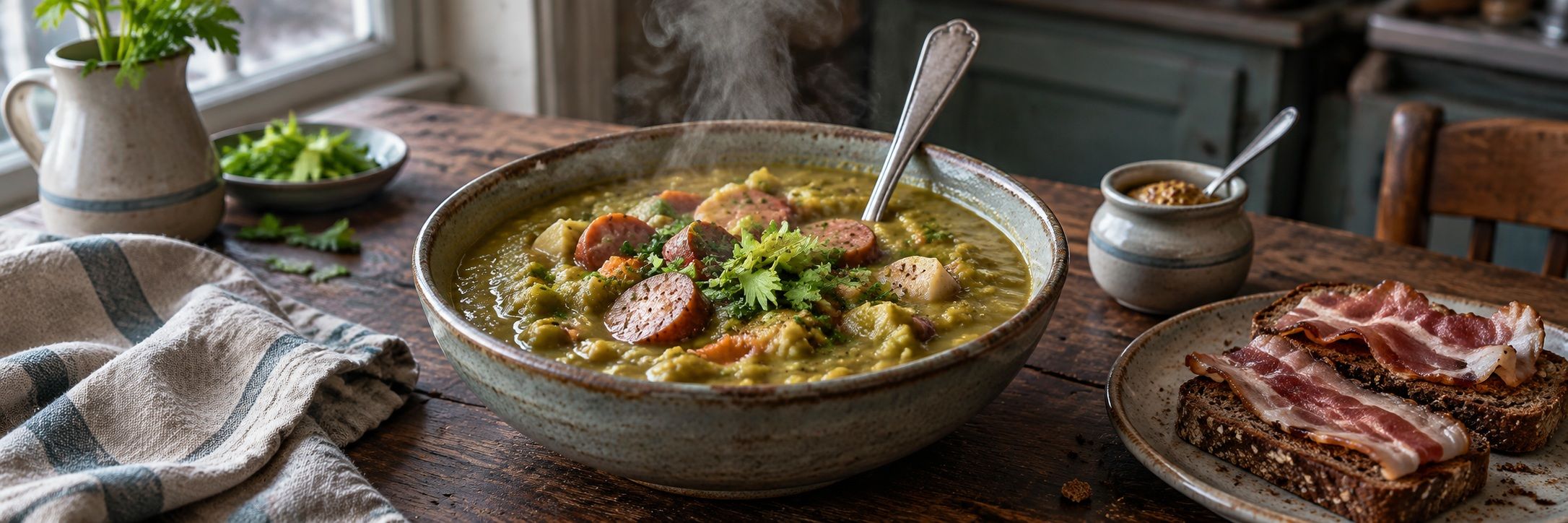
A bowl of thick Dutch split pea soup (snert) with slices of rookworst, served with rye bread and bacon

The story

Snert, known more formally as erwtensoep, is built from things that kept through a long winter before refrigeration: dried split peas, root vegetables and smoked pork. It is less a soup than a stew with ambitions. The Dutch test is well known: a spoon placed upright in the pan should stay there. If it falls over, keep cooking.

It is also the food of the ice. When the canals and lakes freeze, stalls called koek-en-zopie appear beside the skating routes selling snert and hot chocolate. The country takes it seriously enough to hold an annual world championship of snert cooking in Groningen. Make it a day ahead. The peas keep absorbing liquid overnight and the flavour deepens, which makes this one of the few dishes where laziness and good technique are the same thing.

Prep
25 min
Cook
2 hr
Makes
6–8 bowls
Level
Easy

Ingredients

  • 500 g dried green split peas (spliterwten)
  • 2 litres cold water
  • 500 g pork ribs (krabbetjes) or 1 small pork hock
  • 150 g smoked bacon in one piece (rookspek)
  • 1 rookworst, about 275 g
  • ½ celeriac (about 400 g), peeled and diced
  • 2 leeks, washed and sliced
  • 2 carrots, diced
  • 1 large onion, chopped
  • 2 medium floury potatoes, diced
  • 2 bay leaves
  • Small bunch of celery leaf (selderij), chopped
  • Salt and black pepper
  • To serve: rye bread (roggebrood), mustard, thin slices of smoked bacon (katenspek)

Method

  1. Rinse the split peas under cold water until it runs clear. Put them in a large, heavy pan with the water, pork ribs, bacon and bay leaves.
  2. Bring to the boil and skim off the foam that rises. Lower the heat and simmer gently for 45 minutes, stirring now and then so the peas do not catch on the bottom.
  3. Add the celeriac, leeks, carrots, onion and potatoes. Simmer for another 45 to 60 minutes, stirring more often as it thickens, until the peas have collapsed completely.
  4. Lift out the ribs and bacon. Pull the meat from the bones, chop the bacon, and return both to the pan. Discard the bones and bay leaves.
  5. Add the whole rookworst and warm it through for 15 to 20 minutes. Lift it out, slice it, and stir the slices back in with the celery leaf. Season with salt and plenty of pepper.
  6. Cool, then refrigerate overnight. Reheat gently the next day with a splash of water, stirring often. Serve with rye bread, mustard and katenspek.

Cook's note. Salt at the end, not the beginning: the bacon and rookworst season the pan as they cook. Snert freezes very well in portions, which is how most Dutch households get through January.

Where to try it in Amsterdam

  • De Blauwe HollanderLeidsekruisstraat 28, near LeidsepleinProper thick snert served the traditional way, with bacon and dense rye bread.
  • MoedersRozengracht 251, JordaanDutch home cooking in a room wallpapered with photographs of customers' mothers. Dinner only, and you should book.
Recipe 02 · Main course · Oct – Feb

Boerenkoolstamppot Kale and potato mash with smoked sausage

Potatoes, kale, smoked sausage and a pool of gravy. Dutch comfort food at its most direct.

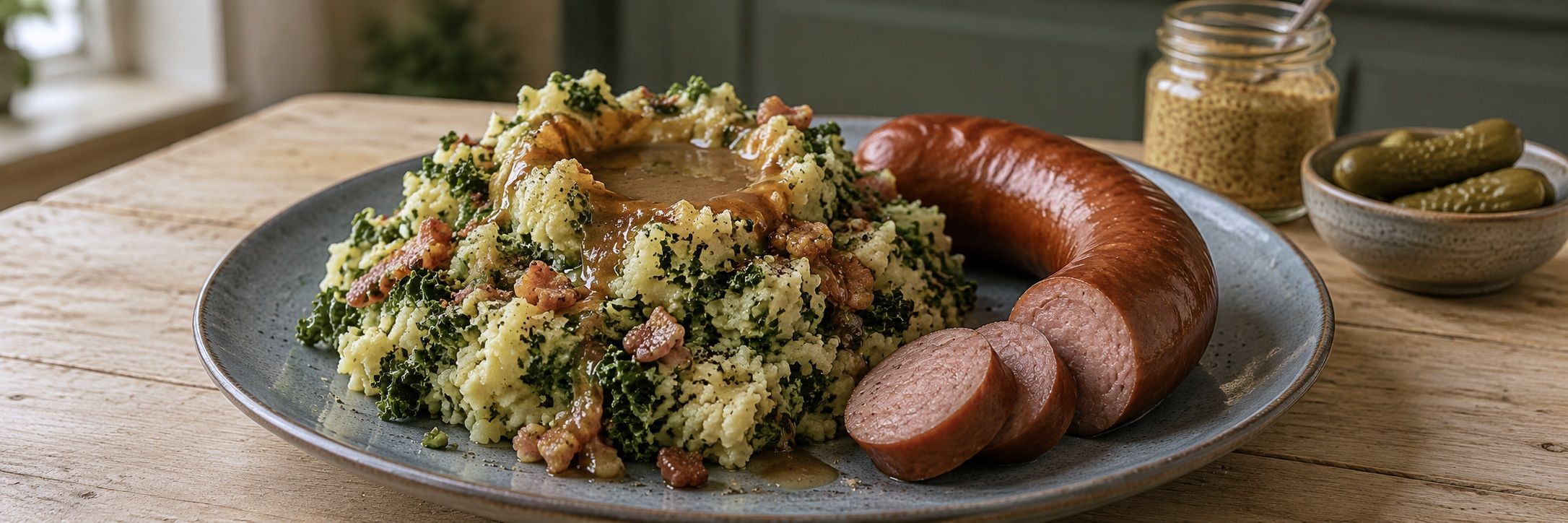
Boerenkoolstamppot: kale and potato mash with a well of gravy and a smoked rookworst sausage

The story

Stamppot means, roughly, "mash pot": potatoes mashed together with a vegetable. The idea is older than the potato itself in Dutch kitchens. Earlier versions used parsnips and other roots, and potatoes only became the everyday staple during the 18th century. The kale version, boerenkool, is the national favourite, and tradition holds that kale tastes best after the first night frost.

The family is large. Zuurkoolstamppot uses sauerkraut, andijviestamppot has raw endive stirred through at the last moment, and hete bliksem ("hot lightning") adds apples. All of them come with a kuiltje jus, a small well pressed into the top of the mash and filled with gravy. Dutch children are taught to build one before they are taught to ride a bike, or so it seems.

Prep
15 min
Cook
30 min
Makes
4 generous plates
Level
Easy

Ingredients

  • 1.2 kg floury potatoes (look for "kruimig" on the bag), peeled and halved
  • 600 g chopped curly kale (one bag of gesneden boerenkool)
  • 1 rookworst, about 275 g
  • 150 g smoked bacon lardons (spekjes)
  • 150 ml whole milk, warmed
  • 40 g butter
  • 1 tbsp Dutch mustard, plus extra to serve
  • Freshly grated nutmeg
  • Salt and black pepper
  • To serve: gravy (jus), pickled gherkins or piccalilli

Method

  1. Put the potatoes in a large pan and add just enough salted water to barely cover them. Pile the kale on top; it will steam as the potatoes boil.
  2. Bring to the boil, cover and simmer for 20 to 25 minutes until the potatoes are completely tender.
  3. Meanwhile, warm the rookworst in a separate pan of water kept just below a simmer for 15 to 20 minutes. Do not let it boil or the skin will split.
  4. Fry the lardons in a dry pan over a medium heat until crisp. Keep the fat.
  5. Drain the potatoes and kale well, return them to the pan and mash coarsely with the milk, butter, mustard and a good grating of nutmeg. Fold in the lardons and a spoonful of their fat. Season to taste.
  6. Serve in a mound with a well of gravy in the centre, the sliced rookworst alongside, and mustard and gherkins on the table.

Cook's note. Keep the mash rough. A smooth purée is considered a failure of character. For zuurkoolstamppot, swap the kale for 500 g of drained sauerkraut and warm it through with the potatoes for the last 10 minutes.

Where to try it in Amsterdam

  • MoedersRozengracht 251, JordaanThe house stamppot arrives ringed with sausage, bacon and a meatball. There is a vegetarian version too.
  • 't HeemelrijckVan Woustraat 23, De PijpA neighbourhood eetcafé with old-Amsterdam charm and seasonal stamppot on the menu.

Recipe 03 · Main course · 3 Oct, then all winter

Hutspot met klapstuk Carrot and onion mash with slow-cooked beef

The dish that commemorates the end of a siege, still eaten by a whole city every 3 October.

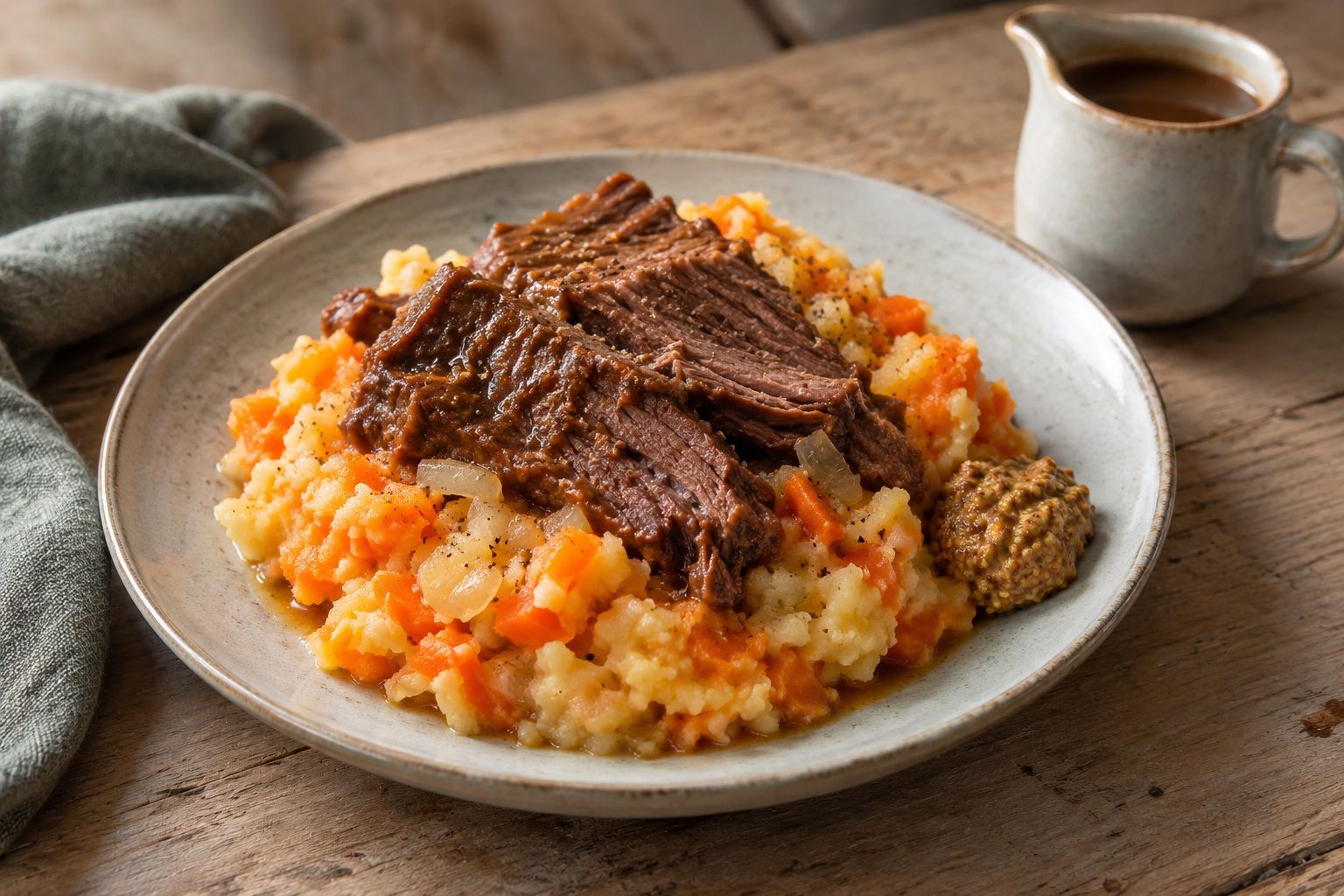
Hutspot: carrot, onion and potato mash topped with slow-cooked beef and mustard

The story

Hutspot has the best origin story in Dutch cooking. In 1574 Leiden had been under Spanish siege for months and its people were starving. When the dykes were cut and the Spanish army withdrew on 3 October, a boy named Cornelis Joppenszoon is said to have found a pot of stew still warm in the abandoned camp. The relief fleet followed with herring and white bread.

Leiden has marked Leidens Ontzet every 3 October since, with hutspot for dinner and herring and bread handed out in the morning. The original pot would have held parsnips rather than potatoes, which had not yet reached Dutch kitchens. The modern version is potatoes, carrots and onions, with klapstuk, a cut of beef rib that needs long, slow cooking and rewards it.

Prep
20 min
Cook
3 hr 15 min
Makes
4 plates
Level
Easy

Ingredients

  • 600 g klapstuk (beef thin rib; brisket is a good substitute)
  • 1 litre water
  • 1 bay leaf, 6 black peppercorns, 1 tsp salt
  • 1 kg floury potatoes, peeled and quartered
  • 750 g winter carrots (winterpeen), peeled and diced
  • 400 g onions, sliced
  • 40 g butter
  • Salt and black pepper
  • Dutch mustard, to serve

Method

  1. Put the beef in a pan with the water, bay leaf, peppercorns and salt. Bring to the boil, skim, then cover and simmer very gently for 2½ to 3 hours until the meat is soft enough to pull apart.
  2. Lift out the beef and keep it warm. Strain the cooking liquid and return it to the pan.
  3. Add the potatoes, carrots and onions to the liquid, topping up with water if needed so the vegetables are barely covered. Simmer for 25 minutes until everything is tender.
  4. Drain, keeping the cooking liquid. Mash the vegetables coarsely with the butter and enough of the liquid to make the mash soft but not wet. Season well.
  5. Slice or pull the beef and serve it on top of the hutspot with mustard. Warm the remaining liquid and serve it as a thin gravy.

Cook's note. Winterpeen are the large, thick carrots sold loose or in kilo bags from autumn. They are sweeter and drier than bunched carrots and give hutspot its colour. If you are short of time, a rookworst in place of the beef brings dinner down to 40 minutes.

Where to try it

  • De Blauwe HollanderLeidsekruisstraat 28, near LeidsepleinRotates the stamppot family through the winter, including hutspot with beef.
  • Leiden, on 3 October35 minutes by train from Amsterdam CentraalThe whole city eats hutspot for Leidens Ontzet, with a funfair and parade to go with it. Worth the trip once.

Recipe 04 · Main course · All winter

Hachee Beef and onion stew

Equal weights of beef and onion, a little vinegar, and three unhurried hours.

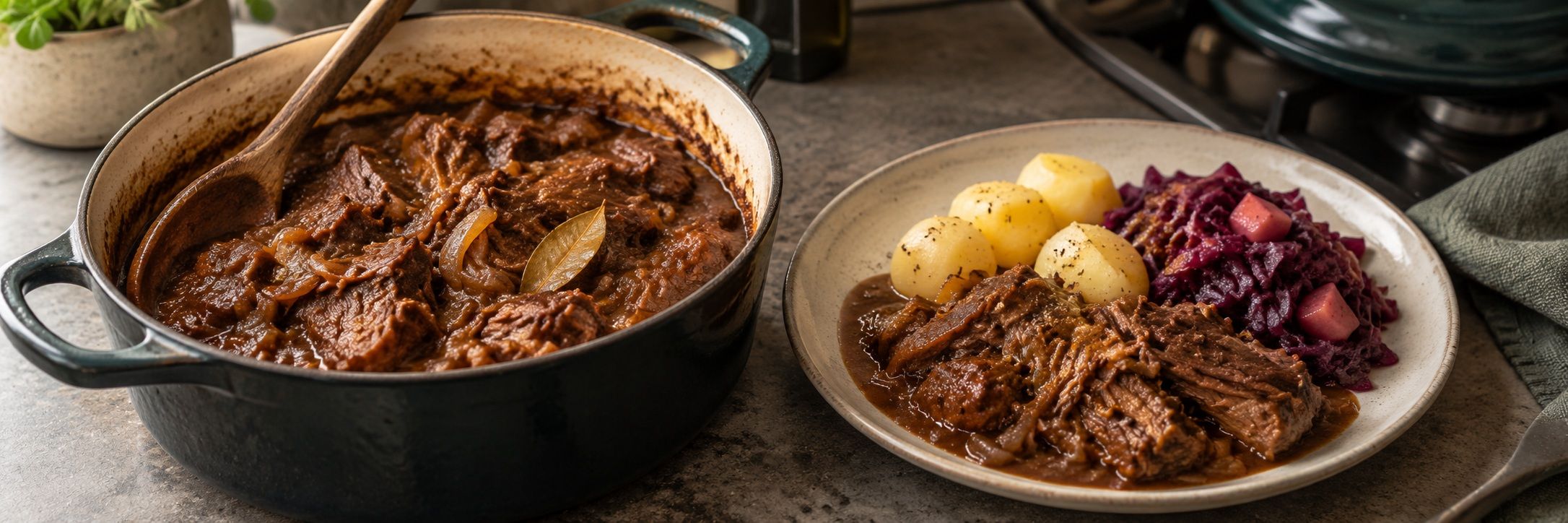
A casserole of hachee, Dutch beef and onion stew, served with red cabbage and potatoes

The story

Hachee (say "ha-SHAY") takes its name from the French hacher, to chop. It began as a thrifty way of using up cooked meat and has been part of Dutch cooking since the Middle Ages. Today it is a slow braise of beef and a remarkable quantity of onions, sharpened with vinegar and scented with bay, cloves and sometimes juniper.

The sweet-and-sour balance is what sets it apart from a French daube or a Flemish carbonnade. Traditional cooks thicken it with a slice of ontbijtkoek, a spiced breakfast cake, spread with mustard and left to dissolve into the sauce. It sounds eccentric and works perfectly. The classic partners are boiled potatoes and red cabbage with apple.

Prep
25 min
Cook
3 hr
Makes
4 plates
Level
Medium

Ingredients

  • 750 g stewing beef (runderlappen or sukadelappen), in large cubes
  • 500 g onions (about 4 large), sliced into half-moons
  • 40 g butter
  • 2 tbsp plain flour
  • 400 ml beef stock
  • 2 tbsp red wine vinegar
  • 2 bay leaves
  • 3 cloves
  • 4 juniper berries, lightly crushed (optional)
  • 1 slice ontbijtkoek spread with 1 tsp mustard, or 1 tbsp appelstroop
  • Salt and black pepper
  • To serve: boiled potatoes or mash, red cabbage with apple (rode kool met appel)

Method

  1. Take the beef out of the fridge half an hour ahead, pat it dry and season generously with salt and pepper.
  2. Melt half the butter in a heavy casserole over a high heat and brown the beef in batches until well coloured. Set aside.
  3. Lower the heat, add the rest of the butter and the onions, and cook for about 15 minutes, stirring, until soft and golden.
  4. Stir in the flour and cook for a minute. Add the stock and vinegar, scraping up everything stuck to the bottom of the pan, then add the bay, cloves and juniper.
  5. Return the beef. The liquid should only just cover it. Cover with the lid slightly ajar and simmer on the lowest possible heat for 2½ to 3 hours, stirring occasionally.
  6. For the last 30 minutes, lay the ontbijtkoek on top, mustard side down, and let it dissolve; stir it through. Remove the bay leaves and cloves, check the seasoning and serve.

Cook's note. Sukadelappen (chuck) have more connective tissue than standard runderlappen and give a silkier result. Replace half the stock with a dark Dutch bock beer in autumn if you like. Like snert, hachee is better the next day.

Where to try it in Amsterdam

  • MoedersRozengracht 251, JordaanHachee and suddervlees (slow-braised beef) are house specialities.
  • Bistro AmsterdamPrinsengracht 287, JordaanA canal-side bistro serving the Dutch classics, hachee among them.

Recipe 05 · Side dish · Sep – Jan

Stoofpeertjes Slow-poached red pears

Hard cooking pears that turn deep red after two hours in the pan. The prettiest thing on the winter table.

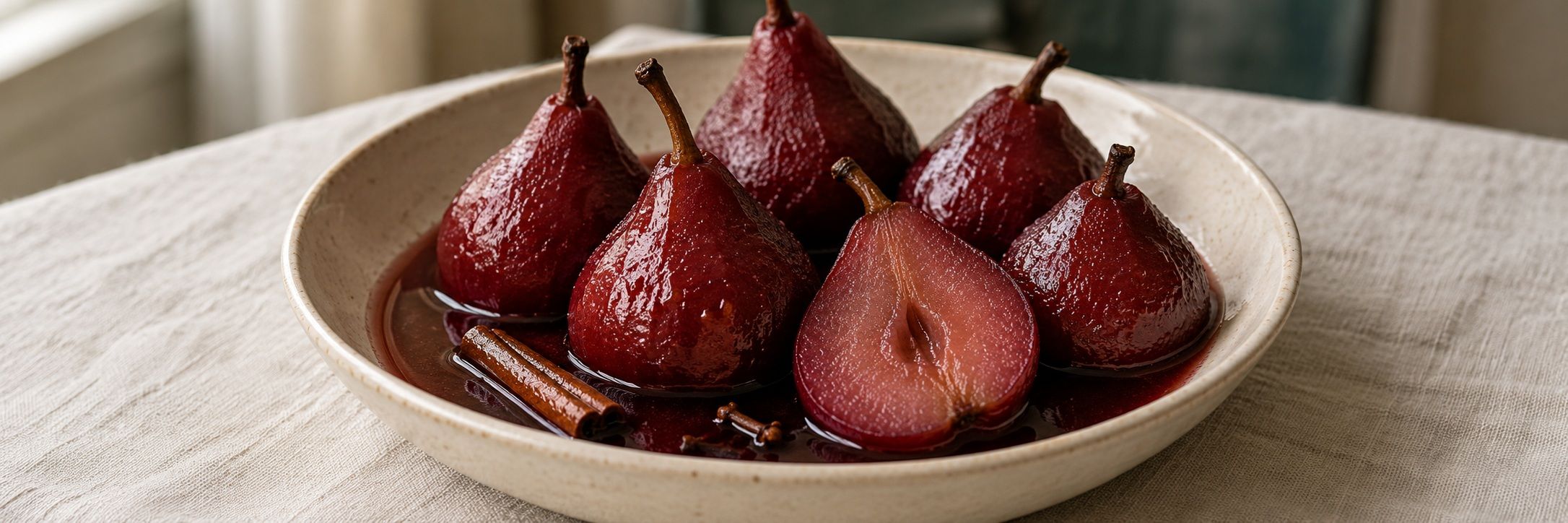
Stoofpeertjes: ruby-red poached Dutch stewing pears in syrup with a cinnamon stick

The story

Dutch markets sell a small, russet pear called the Gieser Wildeman from September onwards. Raw, it is hard and thoroughly unrewarding. Simmered slowly with cinnamon and a little sugar, it turns soft, fragrant and a deep ruby red. The colour comes from the pear itself during long cooking; wine or blackcurrant juice simply helps it along.

Stoofpeertjes sit between a side dish and a dessert. They are served warm beside hachee, game or the Christmas roast, and cold with yoghurt or vanilla ice cream the next day. They are also the easiest recipe in this guide: peel, simmer, wait.

Prep
15 min
Cook
2 hr 30 min
Makes
4–6 as a side
Level
Easy

Ingredients

  • 1 kg stewing pears (stoofperen), ideally Gieser Wildeman
  • 300 ml red wine, or blackcurrant juice (bessensap) for an alcohol-free version
  • 300 ml water
  • 75 g sugar
  • 1 cinnamon stick
  • 2 cloves
  • 1 strip of lemon peel

Method

  1. Peel the pears, leaving the stalks on. Leave small ones whole and halve the larger ones.
  2. Put them in a pan in which they fit snugly. Add the wine, water, sugar, cinnamon, cloves and lemon peel. The liquid should come most of the way up the pears.
  3. Bring to the boil, then lower the heat as far as it will go. Cover and simmer for 2 to 2½ hours, turning the pears occasionally, until they are tender and deep red.
  4. Lift out the pears. Boil the liquid for 5 to 10 minutes until reduced to a light syrup, then pour it back over them.
  5. Serve warm as a side dish, or chill in the syrup and serve as dessert. They keep for a week in the fridge.

Cook's note. Ordinary eating pears will fall apart, so look for the word "stoofperen" on the label. Short of time? Supermarkets sell perfectly decent stoofpeertjes in jars, and nobody at the table needs to know.

Where to find the pears

  • Noordermarkt and Albert Cuyp MarketJordaan and De PijpGreengrocers at both markets sell Gieser Wildeman pears loose from September until around January.
  • Any supermarketVegetable aisle, or jars near the tinned fruitSold in kilo bags as "stoofperen" through autumn and winter.

Recipe 06 · Dessert · Oct – early Jan

Oliebollen New Year's Eve doughnuts

Fried dough, icing sugar and a queue in the cold. New Year's Eve does not count without them.

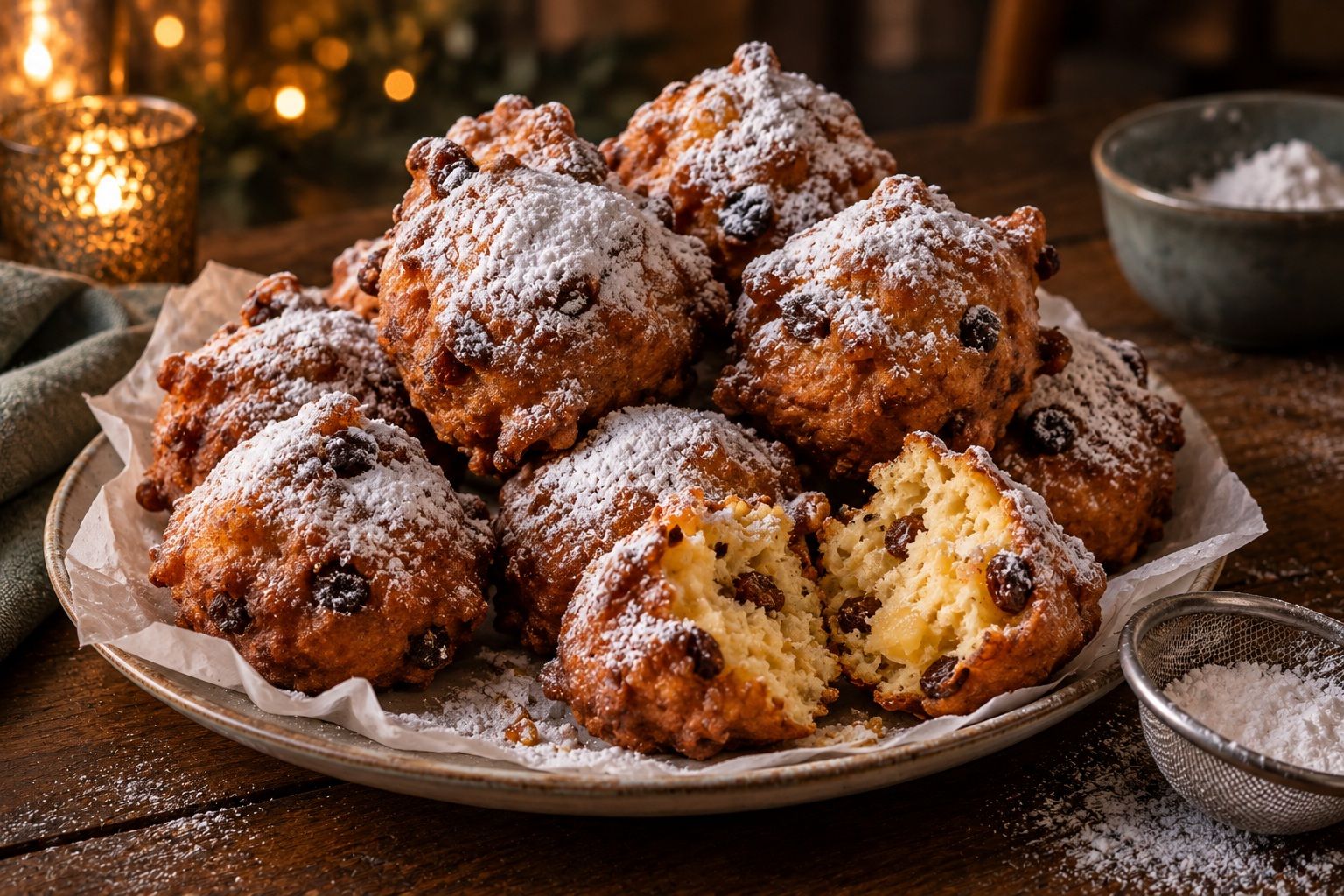
A pile of oliebollen, Dutch New Year's Eve doughnuts, dusted with icing sugar

The story

The name means "oil balls", which is accurate and does them no favours. Oliebollen are yeasted dough balls, often studded with raisins and apple, deep-fried and buried in icing sugar. A recipe for their ancestor, the oliekoek, appears in the 1667 cookbook De Verstandige Kock, and Dutch settlers are widely credited with carrying the idea to America, where it eventually acquired a hole.

They are a seasonal business. Stalls (oliebollenkramen) set up across Amsterdam from October, and on 31 December the queues run down the street as households buy them by the dozen for midnight. By the second week of January most stalls have gone again. Making them at home is a New Year's Eve ritual in itself, and considerably cheaper.

Prep
20 min
Rest
1 hr
Cook
30 min
Makes
About 20
Level
Medium

Ingredients

  • 500 g plain flour
  • 2 sachets (14 g) fast-action dried yeast
  • 25 g caster sugar
  • 10 g fine salt
  • 400 ml lukewarm milk
  • 2 medium eggs
  • 200 g raisins and currants, soaked in warm water for 15 minutes and drained well
  • 1 tart apple, peeled and finely diced
  • Zest of ½ lemon
  • About 2 litres sunflower oil, for frying
  • Icing sugar, to serve

Method

  1. Mix the flour, yeast and sugar in a large bowl. Add the milk and eggs and beat with a wooden spoon for 2 to 3 minutes until you have a smooth, thick, elastic batter. Beat in the salt.
  2. Fold in the well-drained fruit, the apple and the lemon zest. Cover with a damp cloth and leave somewhere warm for about an hour, until doubled in size.
  3. Heat the oil to 180°C in a deep, heavy pan filled no more than one-third full. Use a thermometer.
  4. Dip an ice-cream scoop or two tablespoons in the hot oil, then scoop balls of batter and lower them in carefully. Fry four or five at a time.
  5. Fry for 5 to 6 minutes, turning once, until deep golden brown all over. Many will roll over on their own. Cut the first one open to check it is cooked through.
  6. Drain on kitchen paper, dust heavily with icing sugar and eat warm.

Safety and temperature. Too cool and the oliebollen drink the oil; too hot and they burn before the middle is cooked. Check the temperature between batches. Never leave hot oil unattended, keep a lid within reach, and let the oil cool completely before moving the pan.

Where to buy them in Amsterdam

  • De Amsterdamse OliebollenkraamBelgiëplein, Nieuw-WestRanked the best stall in Noord-Holland for 2025 by Oliebollentestonline, and known for inventive fillings. Go before late afternoon, when the popular ones sell out.
  • Hartog's VolkorenWibautstraat area, OostA much-loved wholemeal bakery whose oliebollen are announced for 7 November 2026 to 31 January 2027. Expect a queue.
  • Bakker's OliebollenkraamSpaarndammerstraat, WesterparkA family stall with decades of history and a previous title of Amsterdam's best.

Recipe 07 · Dessert · Year-round

Appeltaart Dutch apple pie

Deep, sturdy and cinnamon-scented. The one thing every Amsterdam café does well.

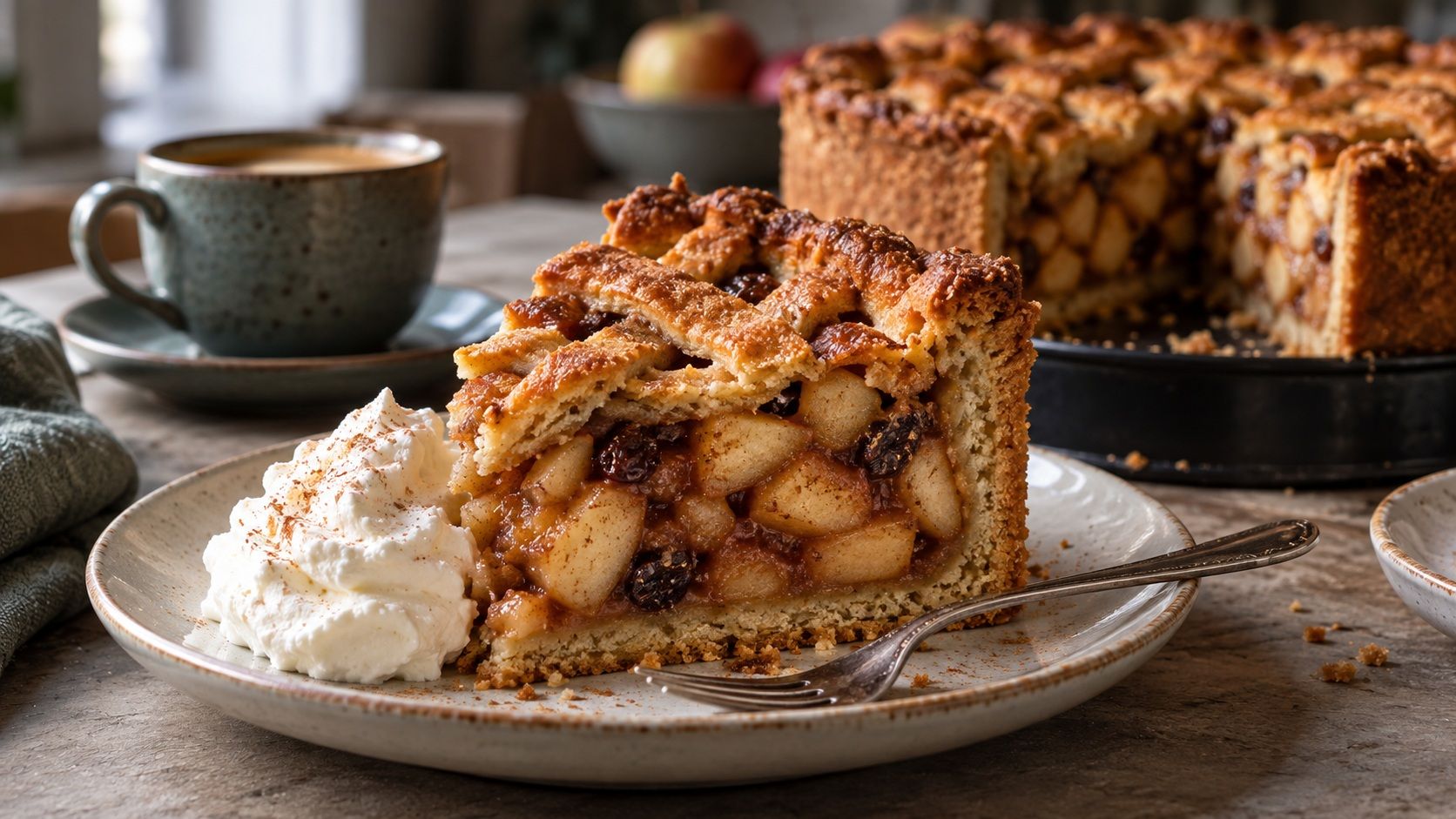
A tall slice of Dutch appeltaart with a lattice crust and whipped cream

The story

Dutch appeltaart is not the shallow, flaky pie of Britain or America. It is tall and substantial, with a soft, buttery crust closer to shortbread, a filling of sliced apple, cinnamon and raisins, and a lattice top. It is baked in a springform tin and cut into wedges that hold their shape.

The recipe is older than most countries. An apple tart appears in Een notabel boecxken van cokeryen, the first cookbook printed in Dutch, around 1514. Five centuries on it remains the default order with coffee, always with the option of slagroom, whipped cream. The correct answer is yes.

Prep
35 min
Rest
30 min
Cook
1 hr 5 min
Makes
One 24 cm tart, 10 slices
Level
Medium

Ingredients

For the crust

  • 300 g self-raising flour (zelfrijzend bakmeel)
  • 200 g cold butter (roomboter), cubed
  • 150 g soft light brown sugar (witte basterdsuiker) or caster sugar
  • 1 medium egg, beaten
  • Zest of ½ lemon
  • Pinch of salt

For the filling

  • 1 kg firm, tart apples (Goudreinet or Elstar)
  • 75 g raisins, soaked in warm water for 15 minutes and drained
  • 50 g sugar
  • 2 tsp ground cinnamon
  • 1 tbsp lemon juice
  • 2 tbsp fine breadcrumbs or custard powder
  • Whipped cream (slagroom), to serve

Method

  1. Rub the butter into the flour, sugar, zest and salt until it resembles coarse crumbs. Add three-quarters of the egg and bring together quickly into a dough. Wrap and chill for 30 minutes.
  2. Heat the oven to 175°C (160°C fan). Butter a 24 cm springform tin.
  3. Peel and core the apples and cut into chunky slices. Toss with the raisins, sugar, cinnamon and lemon juice.
  4. Press two-thirds of the dough over the base and all the way up the sides of the tin. Scatter the breadcrumbs over the base to absorb the juices.
  5. Pack in the apples, pressing down firmly. Roll out the remaining dough, cut into strips and lay them in a lattice over the top. Brush with the rest of the egg.
  6. Bake for 60 to 70 minutes until deep golden. Cool completely in the tin before releasing it. Serve at room temperature or just warm, with whipped cream.

Cook's note. Goudreinet (Belle de Boskoop) is the classic Dutch baking apple: sharp, firm and in the shops from October. The tart cuts cleanly only when fully cooled, so bake it in the morning for the afternoon. It keeps for three days.

Where to try it in Amsterdam

  • Winkel 43Noordermarkt 43, JordaanThe city's most famous slice, sold by the hundred every day. On Saturdays, when the farmers' market is on the square, expect to queue.
  • Café PapeneilandPrinsengracht 2, JordaanA brown café dating from 1642 on one of the prettiest canal corners in the city, with an appeltaart of long-standing reputation.

Recipe 08 · Dessert · Year-round

Poffertjes Small buckwheat pancakes

Coin-sized, yeasted and served by the dozen under butter and icing sugar.

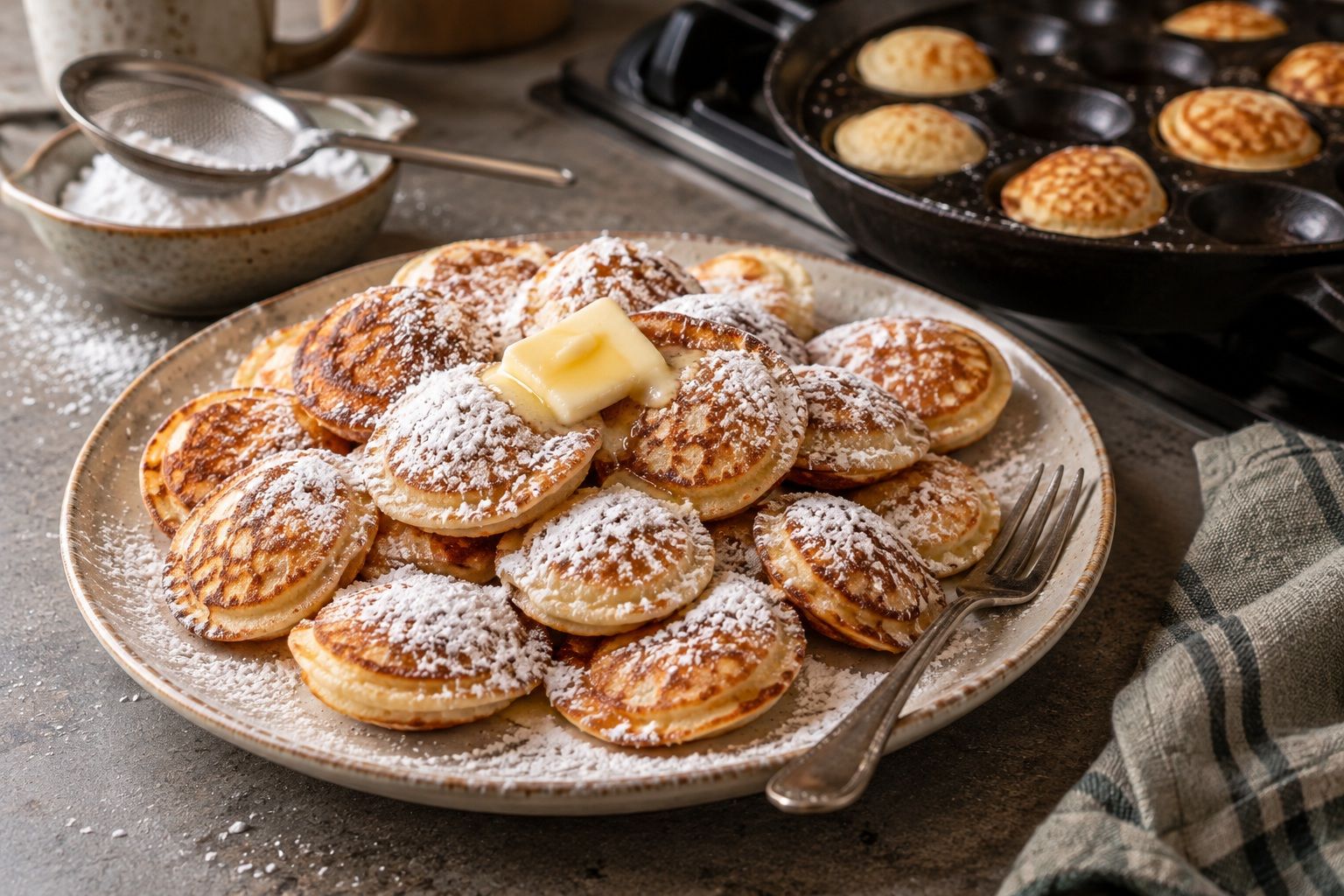
Poffertjes: small Dutch buckwheat pancakes with melting butter and icing sugar

The story

Poffertjes are made from a yeasted batter with buckwheat flour, which gives them a lightness and a faint nutty tang that ordinary pancakes lack. They are cooked in a poffertjespan, a heavy pan with rows of shallow dimples, and flipped with a fork at a speed that takes stallholders years to perfect.

They belong to the fairground and the market. The travelling poffertjeskraam, with its brass fittings and mirrors, has been a fixture of Dutch fairs since the 19th century. They are sold all year, but they make most sense in winter, eaten from a paper tray with cold hands.

Prep
10 min
Rest
45 min
Cook
20 min
Makes
About 60, enough for 4
Level
Easy

Ingredients

  • 125 g buckwheat flour (boekweitmeel)
  • 125 g plain flour
  • 1 sachet (7 g) fast-action dried yeast
  • 1 tsp sugar
  • Pinch of salt
  • 350 ml lukewarm milk
  • 1 medium egg
  • 25 g butter, melted, plus extra for the pan
  • To serve: cold butter and icing sugar

Method

  1. Whisk the flours, yeast, sugar and salt together in a bowl. Add the milk, egg and melted butter and whisk to a smooth batter.
  2. Cover and leave somewhere warm for 45 minutes, until the surface is bubbly.
  3. Heat a poffertjespan over a medium heat and brush each dimple with melted butter.
  4. Pour the batter into a jug or squeeze bottle and fill each dimple almost to the top.
  5. After about 2 minutes, when the edges have set and bubbles appear, flip each one with a fork or skewer. Cook for another 1 to 2 minutes until golden and puffed.
  6. Serve immediately with a slice of cold butter on top and a heavy dusting of icing sugar.

Cook's note. A poffertjespan is inexpensive and sold at household shops such as Blokker, which has reopened in Amsterdam, HEMA and Dille & Kamille. Without one, drop teaspoons of batter into a buttered non-stick frying pan. The shape is flatter but the taste is the same.

Where to try them in Amsterdam

  • The Pancake BakeryPrinsengracht 191, JordaanA long-established pancake house in a 17th-century canal warehouse, serving poffertjes as well as full-size pannenkoeken.
  • Albert Cuyp MarketAlbert Cuypstraat, De PijpFresh from the pan at the market stalls, Monday to Saturday. The paper tray and wooden fork are part of it.

Recipe 09 · Biscuit · Sep – 5 Dec

Kruidnoten Spiced Sinterklaas biscuits

Small, crunchy, spiced, and thrown at children by the handful in early December.

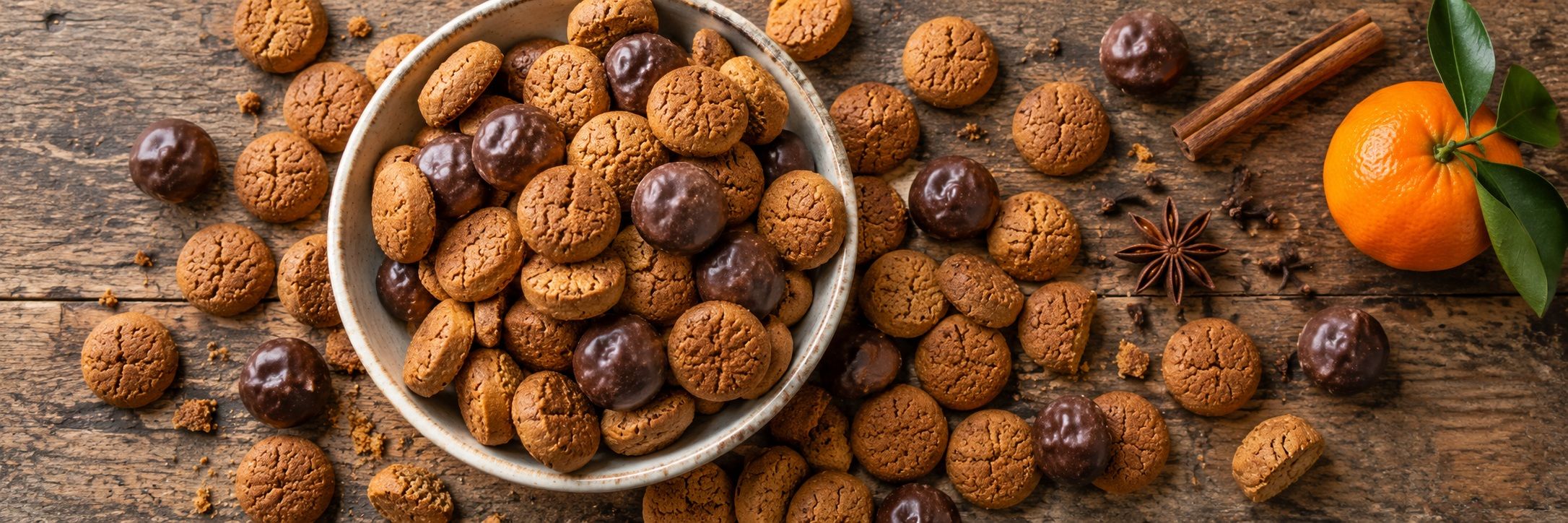
A bowl of kruidnoten, small spiced Dutch Sinterklaas biscuits, some coated in chocolate

The story

Dutch winter has a festival before Christmas. Sinterklaas arrives by steamboat in mid-November and the celebration peaks on 5 December, pakjesavond, when presents are exchanged with teasing poems. The food of the season is flavoured with speculaaskruiden, a blend of cinnamon, cloves, nutmeg, ginger, cardamom and white pepper that dates from the spice trade.

Kruidnoten are the small, domed, crunchy biscuits that appear in supermarkets from the end of summer, to annual national complaint and enthusiastic national purchase. Many people call them pepernoten. Strictly speaking, those are a different, chewier biscuit flavoured with anise, and the Dutch will happily explain the distinction to you at length. Kruidnoten take half an hour and are the ideal recipe to make with children.

Prep
20 min
Cook
18 min
Makes
About 80
Level
Easy

Ingredients

  • 250 g self-raising flour (zelfrijzend bakmeel)
  • 125 g dark brown sugar (donkere basterdsuiker)
  • 100 g cold butter, cubed
  • 2 tbsp speculaaskruiden (Dutch speculaas spice mix)
  • Pinch of salt
  • 4–5 tbsp milk

Method

  1. Heat the oven to 170°C (150°C fan) and line two baking trays with baking paper.
  2. Mix the flour, sugar, spices and salt. Rub in the butter with your fingertips until it looks like breadcrumbs.
  3. Add the milk a spoonful at a time and knead briefly until the dough comes together into a smooth, firm ball.
  4. Roll the dough into marble-sized balls and set them on the trays with a little space between them. Press each one down lightly so it has a flat base.
  5. Bake for 15 to 18 minutes. They will still feel slightly soft when they come out and will crisp as they cool.
  6. Cool completely on the tray and store in an airtight tin for up to two weeks.

Cook's note. Speculaaskruiden are sold in small jars in the spice aisle of every supermarket. To make them more festive, dip the cooled biscuits in melted dark or milk chocolate, which is how most of the supermarket versions are now sold.

Where to find them

  • Any supermarket or HEMASeasonal aisle, from early autumnPlain, chocolate-coated and in a growing number of flavours. Buying a bag in September is permitted; admitting it is optional.
  • Sinterklaas arrival paradeCentral Amsterdam, mid-NovemberThe official arrival by boat and parade through the city, with kruidnoten handed out along the route.

Ingredients

Where to buy Dutch winter ingredients in Amsterdam

Nothing in this guide needs a specialist shop. These are everyday ingredients and every supermarket carries them, usually in a seasonal display near the vegetables from October. Where you shop mostly decides the quality of the produce and the meat.

  • Albert Heijn

    Everything, everywhere

    The largest chain, with a branch within a few minutes' walk of most addresses. Bags of chopped boerenkool, rookworst, split peas and ready-made jus are winter staples. Sign up for the free Bonus card in the app; many shelf prices assume you have one.

  • Jumbo

    Meat and weekly shop

    Usually a little cheaper, with a good fresh meat counter in the larger branches. A reliable source of sukadelappen for hachee and pork ribs for snert.

  • Albert Cuyp Market

    Produce, Monday to Saturday

    The city's best-known street market, running through the middle of De Pijp. Winter vegetables, apples and stewing pears are cheaper here than in the supermarket, and you can eat poffertjes while you shop.

  • Noordermarkt farmers' market

    Organic, Saturdays 9:00–16:00

    The Boerenmarkt in the Jordaan is the place for celeriac, kale, leeks and winter carrots straight from the growers. Arrive before eleven, then reward yourself with appeltaart at Winkel 43 on the corner.

  • Your local butcher

    Rookworst and stewing beef

    Look for the word slagerij. A butcher's fresh rookworst is juicier and smokier than the vacuum-packed kind, and they will cut klapstuk or sukadelappen to order. Many also sell their own snert by the litre in winter.

  • Ekoplaza

    Organic supermarket

    An organic chain with branches across the city. Worth the extra cost for the main ingredient in a slow-cooked dish, where the quality of the beef or the butter is what you taste.

A supermarket glossary for winter cooking

Dutch labels are easy once you know a dozen words. These are the ones this guide relies on.

Dutch ingredient names with English translations and where to find them in a supermarket
DutchEnglishWhere to look
SpliterwtenGreen split peasDried pulses, near the rice
RookworstSmoked sausageChilled meats; vegetarian versions sit alongside
BoerenkoolCurly kaleVegetable aisle, sold ready-chopped in bags
ZuurkoolSauerkrautChilled bags near the vegetables, or jars
KnolselderijCeleriacLoose in the vegetable aisle
WinterpeenLarge winter carrotsLoose or in kilo bags
Kruimige aardappelenFloury potatoesThe bag says "kruimig"; "vastkokend" means waxy
Spekjes / rookspekBacon lardons / smoked baconChilled meats
SukadelappenBeef chuck for stewingFresh meat; "runderlappen" is the leaner alternative
OntbijtkoekSpiced breakfast cakeBread and biscuit aisle
StoofperenStewing pearsFruit aisle, September to January
SpeculaaskruidenSpeculaas spice mixSpice rack
BoekweitmeelBuckwheat flourBaking aisle
Zelfrijzend bakmeelSelf-raising flourBaking aisle
BasterdsuikerSoft brown sugar (white, light or dark)Baking aisle
RoomboterReal butterDairy; anything else is margarine
SlagroomWhipping creamDairy; essential with appeltaart
JusGravySachets and cartons near the stock cubes

At home

Cooking Dutch in an Amsterdam kitchen

Amsterdam kitchens are compact, and Dutch winter cooking suits them. Most of these dishes need one large pan and a hob. A pot of snert or hachee made on Sunday covers several weekday dinners, which is how Dutch households have always handled January.

Every City Retreat home has a fully equipped kitchen, with the pans, knives and oven dishes already in the cupboards on the day you move in. Our expat rentals and corporate rentals in Amsterdam are furnished homes with utilities and Wi-Fi included in one monthly rent, so the only thing left to organise in your first week is dinner. Find your nearest supermarket, buy a rookworst, and start with the stamppot.

Common questions

Dutch winter food: frequently asked questions

What do the Dutch traditionally eat in winter?

The core of Dutch winter cooking is thick split pea soup (snert), mashed potato dishes known as stamppot and hutspot served with smoked sausage, and slow-cooked beef stews such as hachee. The sweet side of the season runs from kruidnoten and speculaas for Sinterklaas on 5 December to oliebollen on New Year's Eve, with appeltaart and poffertjes available all year.

What is the difference between stamppot and hutspot?

Stamppot is the general term for potatoes mashed together with a vegetable. Hutspot is one specific stamppot, made with carrots and onions and linked to the relief of Leiden on 3 October 1574. Other members of the family include boerenkoolstamppot (kale), zuurkoolstamppot (sauerkraut) and andijviestamppot (raw endive).

What is rookworst, and what can I use instead?

Rookworst is a smoked, U-shaped Dutch pork sausage sold ready-cooked in every supermarket. It only needs warming in hot, not boiling, water. Outside the Netherlands, a smoked Polish kielbasa is the nearest substitute. Vegetarian rookworst is widely sold in Dutch supermarkets and works well with stamppot.

When are oliebollen sold in Amsterdam?

Oliebollen stalls typically set up in Amsterdam during October and trade until early January, with a few continuing to the end of the month. Demand peaks on 31 December, when most households buy them for New Year's Eve. If you want them from a well-known stall on that day, go early or order ahead.

Can these dishes be made vegetarian?

Most of them, yes. Stamppot and hutspot work well with vegetarian rookworst, a fried egg or mature cheese stirred through. Snert can be made with vegetable stock, smoked paprika and a vegetarian sausage. Stoofpeertjes, oliebollen, appeltaart, poffertjes and kruidnoten contain no meat. Hachee is the hardest to adapt, though a version with large mushrooms and the same sweet-and-sour sauce is worth making.

Where can I buy the ingredients in Amsterdam?

Any Albert Heijn or Jumbo stocks everything in this guide, including split peas, rookworst, chopped kale, speculaas spices and stewing pears in season. For better produce, use Albert Cuyp Market in De Pijp from Monday to Saturday or the organic farmers' market on Noordermarkt on Saturdays. A neighbourhood butcher is worth a visit for stewing beef and fresh rookworst.

Do I need special equipment?

Very little. A large heavy pan covers the soup, the stews and the mashes. The appeltaart needs a 24 cm springform tin, and oliebollen need a deep pan and a thermometer. The only specialist item is a poffertjespan, which is inexpensive, and a frying pan will do in its place. Many Amsterdam apartments have a combination microwave oven rather than a full-size one; it bakes an appeltaart perfectly well on the convection setting.

Which Dutch winter dishes can I make ahead or freeze?

Snert and hachee both improve after a night in the fridge and freeze well for up to three months. Stoofpeertjes keep for a week in their syrup. Stamppot and hutspot are best eaten fresh, although leftovers fry up well in butter the next day. Oliebollen and poffertjes should be eaten within minutes of cooking.

Moving to Amsterdam this winter?

City Retreat lets furnished apartments in Amsterdam with a fully equipped kitchen, utilities and Wi-Fi included. Tenancies that start between 1 November and 28 February have a 10% lower monthly rent, which leaves more in the budget for oliebollen.